Could SpaceX’s retirement of Falcon 9 spark a launch crisis?

What happens when the most successful rocket in history stops flying? The world is about to find out Go to Story
The polar vortex is about to go haywire
“Everybody’s hair is on fire in the climate or meteorologist community” Go to Story
What a historic ‘blue wave’ midterm means for climate action
Democrats swept Congress and won in red states. Here are the races that matter most for decarbonization, disasters, and data centers Go to Story

A drug-free diabetes treatment? An implant lowers blood sugar in mice

The wireless implant rids mice’s bodies of excess sugar on demand, and helps them shed weight. It could one day help treat diabetes and obesity.Go to story
NASA’s Swift telescope plunges back to Earth
The observatory had spent decades studying powerful cosmic explosions and was the target of an unsuccessful rescue mission earlier this year Go to Story
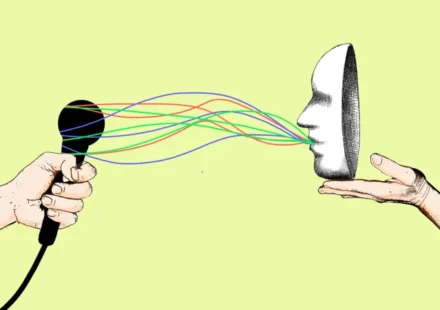
Your voice can now say things you never said
Synthetic voices can restore speech, enable scams and outlive their owners. These uses raise questions about trust, consent and control.Go to story

Ancient DNA traces origins of English, German and Scandinavian languages

English, German, Dutch and the Scandinavian languages are all members of the Germanic language group, spoken by hundreds of millions of people today. But where did these languages come from?Go to story

Researchers use seasonal satellite imagery to map shrub encroachment in Inner Mongolia grasslands
Researchers from the Aerospace Information Research Institute of the Chinese Academy of Sciences (AIRCAS) used satellite images collected across the growing season to map shrub cover in the grasslands of Inner Mongolia, China. By tracking seasonal…

New modeling links gaps in Earth’s geological record to rising and sinking continents
Research led by a University of Wollongong (UOW) Ph.D. candidate may have solved one of Earth’s most perplexing geological mysteries: What caused the Great Unconformity?Go to story
NASA’s James Webb Space Telescope is wobbly-scientists have a fix that could reveal new alien worlds
By modeling the James Webb Space Telescope’s tiny movements, a new technique can reveal up to 15 times fainter alien worlds Go to Story