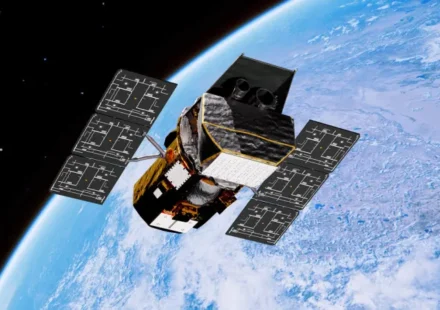
NASA’s Swift telescope will face a fiery demise after a failed rescue

Designed to study the powerful outbursts, the Swift Observatory quickly contributed to a wide range of discoveries. Now, it’s about to meet a fiery fate.Go to story
The Super El Niño is already soaking the U.S. Expect more flooding to come

This week Florida and the Four Corners region have been hammered by major rain events, swamping roads and washing away homes Go to Story

Satellite analysis finds little evidence that data centers cause widespread ground warming

A new study published in Environmental Research Letters has found little evidence that hyperscale data centers cause significant heating of surrounding land. While a previous study suggested data centers heat surrounding land by about 2 °C on average (up…

Satellites leak noise that interferes with telescopes and GPS. Here’s how to fix it
Less than a decade ago, there were about 2,000 operational satellites orbiting Earth. Today there are more than 15,000. Millions more are planned.Go to story

Fireworks provide a few minutes of joy, but the economic and environmental costs last much longer
Every Bonfire Night, people pay for a box of fireworks so their friends and family can enjoy the colorful display. Within a few minutes, it’s all over. But the price on the box doesn’t reflect the hidden costs: the smoke inhaled by neighbors,…

Overlooked Melbourne patch reveals 45 animal species and more than 40 plant types
When we think about nature in our cities, what often comes to mind are parks and reserves-planned, managed and clearly marked spaces that support animal and plant life in our urban environment.Go to story

This fruit fly’s aphrodisiac reveals how social and environmental context shape mating practices
Imagine a crowded dance floor where bodies move to the beat beneath a glittering disco ball. Some of the dancers pair up, drawn together by the heady atmosphere. For flies, as for humans, the right atmosphere can serve as a potent aphrodisiac.Go to story
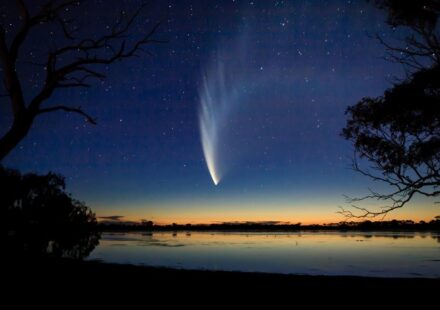
Comets probably didn’t deliver life’s building blocks to Earth
Most comets would have hit Earth with too much speed and at too sharp an angle for life-giving molecules to survive impact, a new study suggests.Go to story
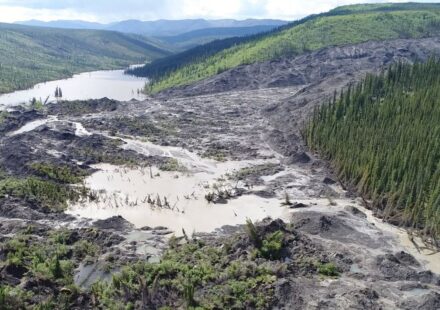
Melting permafrost has birthed a new type of large landslide
Permafrost detachment slides involve large slabs of frozen earth thawing from below and then sliding downhill.Go to story
Science advocates react to Democrats’ historic midterm rout: ‘It’s a new day in Washington’
Researchers and advocates say they hope the ‘blue wave’ could signal more accountability after two years of attacks on science Go to Story