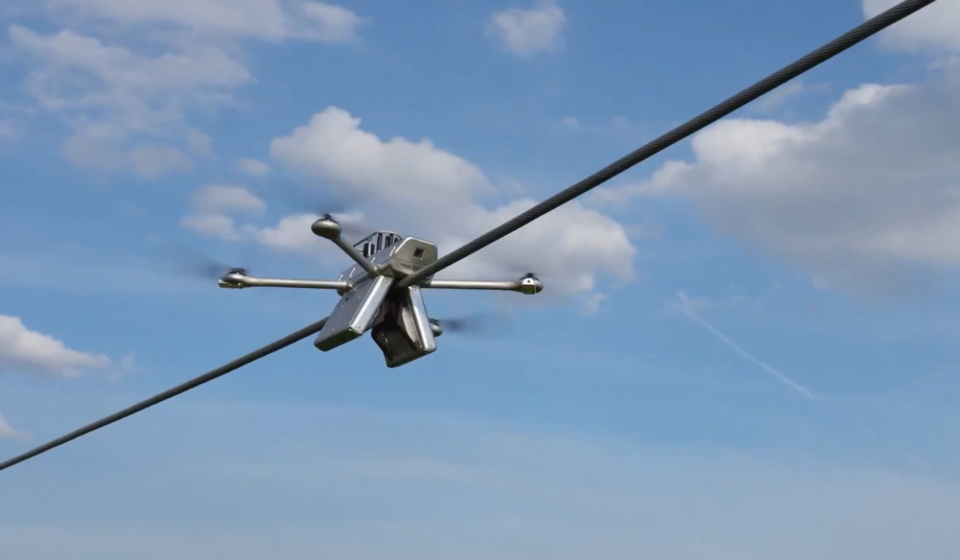

- Nomadic drones recharge directly from magnetic fields surrounding energized power lines
- Each 4 kg drone can monitor approximately 25 kilometers of transmission infrastructure
- Nomadic reports more than 20,000 operating hours across three countries
Electricity networks are facing mounting pressure as renewable energy projects, factories, and data centers demand connections faster than infrastructure expansion can accommodate.
However, identifying weaknesses along existing transmission routes remains difficult because conventional monitoring systems cannot easily capture changing conditions across every section.
A Munich technology company called Nomadic has developed autonomous drones that attach themselves to energized power cables and collect measurements without interrupting electricity transmission.
Drones monitor power lines while harvesting energy from magnetic fields
Each Nomad aircraft weighs approximately 4kg and can attach itself to an energized conductor, drawing operating power through electromagnetic induction.
This arrangement eliminates the need for frequent battery replacements or separate charging infrastructure while allowing continuous observation of electrical transmission conditions.
The aircraft can reach deployment locations within minutes, avoiding the extensive preparation and temporary shutdowns traditionally associated with installing equipment directly onto operational cables.
Nomadic reports accumulate more than 20,000 operating hours across electricity networks in Germany, Norway, and the United States.
Its systems have operated at voltages reaching 420 kV, representing the upper range commonly encountered across European transmission infrastructure.
Testing has also covered temperatures reaching -25 degrees Celsius, with the company reporting reliable operation using energy harvested directly from surrounding electromagnetic fields.
Each aircraft can monitor approximately 25 kilometers of transmission infrastructure, compared with stationary monitoring equipment generally installed at intervals between one and five kilometers.
This coverage allows operators to obtain information across longer distances without deploying numerous permanently mounted monitoring devices.
The company uses its software. Nomadic OS software to analyze measurements collected by its drones alongside weather conditions, grid models, and historical line data.
With this information, operators can identify sections developing faults and those with limited transmission capacity.
“Grid operators often have a good picture of what happens at each substation. Everything in between, along kilometers of line, has been much harder to see, because installing anything on a live line is very difficult,” said Andreas Moldskred, CEO and co-founder of Nomadic.
$6 million in funding will support expansion and remote drone relocation
Nomadic has secured $6 million in seed financing led by Foundamental, alongside Verve Ventures, Cyan Ventures, existing backers Outlander VC and Asia2G Capital, and individual investors.
The company intends to increase deployments with electricity providers throughout Europe and the United States while expanding its workforce.
Another priority involves introducing remote relocation capabilities for commercial customers next year.
This feature will allow operators to direct drones remotely between different power line sections without physically retrieving and redeploying them.
Chief Technology Officer Lauritz Weil said developing equipment capable of attaching itself to energized conductors required extensive engineering and testing.
“Landing on a line carrying up to 420 kV, in wind and at minus 25 degrees, and then running on power from the magnetic field around it, is a hard robotics problem,” Weil said.