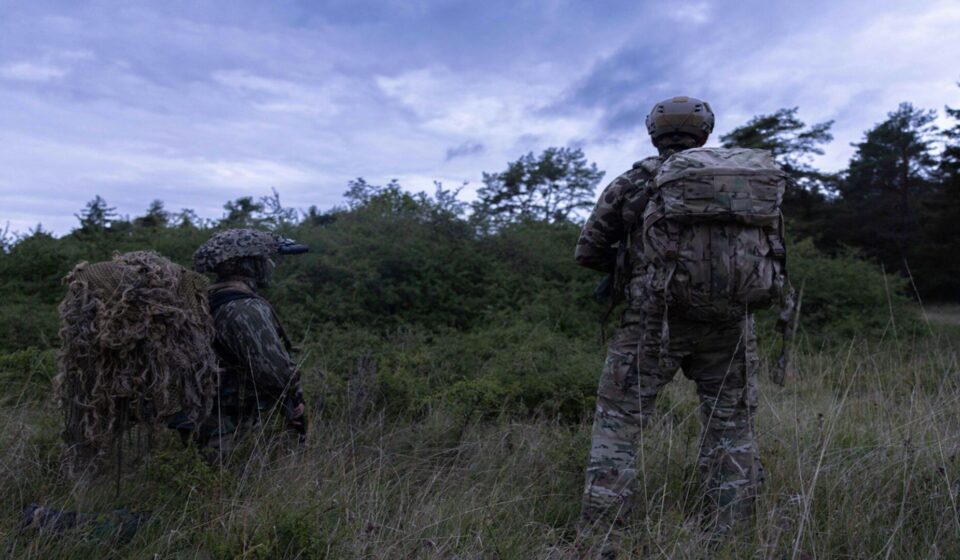

- Polish commandos travelled nearly 100 kilometers while evading thousands of American soldiers
- Elite Polish operators abandoned sophisticated equipment to avoid detection during NATO exercises
- American paratroopers, surveillance drones, and tracking dogs hunted the Polish contingent
Polish special operations troops abandoned much of their sophisticated battlefield technology during a demanding NATO exercise, relying instead on traditional skills to penetrate heavily defended territory.
Their mission involved crossing nearly 100 kilometers of difficult terrain while American paratroopers, surveillance drones, and tracking dogs searched for their positions.
Despite facing thousands of pursuing US soldiers, the Polish operators successfully reached their designated area and launched an attack drone carrying simulated explosives.
Avoiding detection through traditional battlefield skills
The operation formed part of Deep Strike, a military training exercise organized by US Special Operations Command Europe to prepare allied forces for modern warfare.
Conducted at the Joint Multinational Readiness Center in Hohenfels, Germany, the exercise incorporates combat lessons emerging from the war in Ukraine.
This scenario examines how inexpensive unmanned aircraft, thermal imaging equipment, and electronic surveillance have complicated operations previously supported by sophisticated military technology.
On battlefields where opposing forces possess similar detection capabilities, equipment intended to provide advantages can also expose soldiers to enemy surveillance.
The proliferation of attack drones has created dangerous operating environments extending dozens of kilometers beyond established frontline positions.
Thermal cameras can identify personnel attempting nighttime movements, while electronic equipment potentially reveals locations to adversaries monitoring battlefield communications.
A US Army Special Forces major involved in developing the exercise explained that traditional operating methods remain essential under these conditions.
“If we can replicate the front lines of modern warfare here, we can use that to train NATO SOF forces and eventually develop it into an evaluation or validation event,” said the US Army Special Forces major.
Polish operators therefore relied heavily on physical endurance, navigation expertise, and techniques developed through extensive special operations training.
Traditional map reading and terrain recognition were important because they encourage soldiers to understand their surroundings independently.
Deep Strike tests NATO’s ability to penetrate defended territory
The Polish contingent completed its mission after traveling across approximately 100 km of forests and agricultural land under simulated enemy surveillance.
Having reached the designated location, the operators deployed an unmanned aircraft carrying a dummy explosive charge against a simulated electronic warfare installation.
The exercise followed two earlier trials involving personnel from the US Army’s 10th Special Forces Group.
Polish participation marked its expansion beyond American units, opening the training environment to special operations forces from other NATO members.
Its designers developed the scenario following discussions among allied commanders about preparing elite troops for increasingly dangerous penetration missions.
NATO Special Operations Forces Command also contributed to the initiative through its leadership and operational requirements.
The training organizers intend to update subsequent exercises using developments observed during the Russia-Ukraine conflict.
This includes incorporating emerging drone capabilities, surveillance methods, and battlefield conditions into increasingly demanding operational scenarios.
“If current events don’t inform the scenario, then the scenario is only as good as the last time we updated it,” said the US Army Special Forces major.
He added that information from publicly available reporting and classified intelligence helps organizers maintain realistic training conditions.
Via NATO