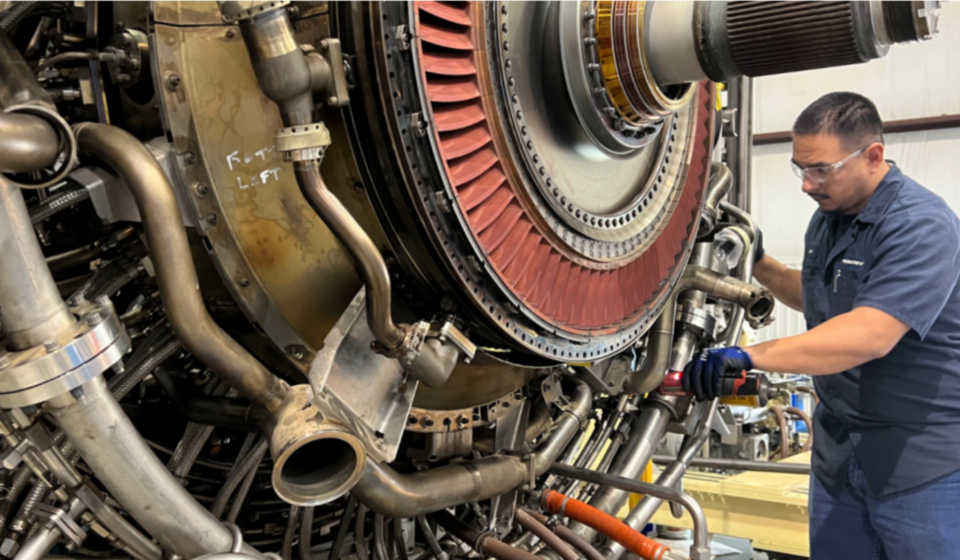

- xAI installs eight converted jet engines to supply its Mississippi data center
- Each refurbished turbine can generate up to 50 megawatts of electricity
- Grid connection delays are pushing AI companies towards alternative power sources
Artificial intelligence companies are increasingly installing aircraft-derived turbines as conventional electricity supplies struggle to keep pace with expanding data center construction.
Elon Musk’s xAI has now placed eight refurbished jet-engine generators at its Mississippi facility, supplying additional electricity for the Colossus 2 computing complex.
The equipment offers a faster route to power than waiting years for grid connections, although its emissions have raised environmental objections.
Old aircraft engines become electricity generators
ProEnergy, a Missouri company, converts retired General Electric aircraft engines into stationary generators, adapting equipment originally designed for aviation applications.
The equipment repurposes turbines that would otherwise remain unused after leaving airline service, giving data center operators another source of dispatchable electricity.
The refurbished units are reportedly capable of producing as much as 50 megawatts apiece, equivalent to the electricity needs of approximately 15,000 homes.
That output makes the technology attractive to operators facing lengthy utility delays, particularly as demand from AI infrastructure continues accelerating.
“It’s all about getting power as fast as possible…they can have a data center running in 24 months,” said Audun Martinsen, an analyst at energy research firm Rystad Energy.
By comparison, connecting a 100-megawatt facility to Northern Virginia’s electricity network can take approximately seven years, according to the International Energy Agency.
An executive at Mitsubishi Power has also warned that much new generation capacity may not become available until 2031, amid equipment shortages.
Electricity shortages collide with environmental concerns
Power shortages threaten ambitious expansion plans across the industry, with forecasts indicating that American data centers could consume 20% of national electricity by 2035.
That projection of July 2026 was 83% higher than an estimate released only seven months earlier, indicating rapidly rising expectations.
The projected increase reflects expectations that computing facilities will require more electricity as companies build systems for training and running artificial intelligence.
By April 2026, approximately half of planned data center developments had reportedly been postponed or abandoned, partly because electricity was unavailable.
xAI faces particular pressure because Musk said in August that the company intended to expand its computing capacity sevenfold before the end of 2027.
Microsoft also recently withdrew as the principal customer for an English data centre project after its utility provider could not guarantee sufficient electricity.
This shows how electricity constraints can affect commercial commitments, even when developers have secured land, financing and customers for planned facilities.
OpenAI adopted gas turbines at its first Stargate facility in Abilene, Texas, in 2025, while developer Crusoe ordered 13 ProEnergy generators in April 2026.
However, the rapid deployment of aircraft-derived equipment has prompted questions about pollution, regulatory oversight and the consequences for nearby communities.
Mississippi permits for xAI’s eight turbines reportedly allow a 25% higher limit for certain volatile organic compounds, alongside concerns about carbon monoxide emissions.
The Southern Environmental Law Center has challenged the state’s approval, arguing that xAI has not adequately addressed pollutants including formaldehyde.
The organization has also questioned projected emissions calculations, after previously suing xAI over generators allegedly operated without required permits near more than 100,000 residents.
It appears that every attempt to solve one problem facing data centres introduces another, leaving operators and regulators with difficult challenges that remain far from resolved.
Via Tom’s Hardware